
| This feature is due for release in Version 4.2. |
Eight-track cassettes
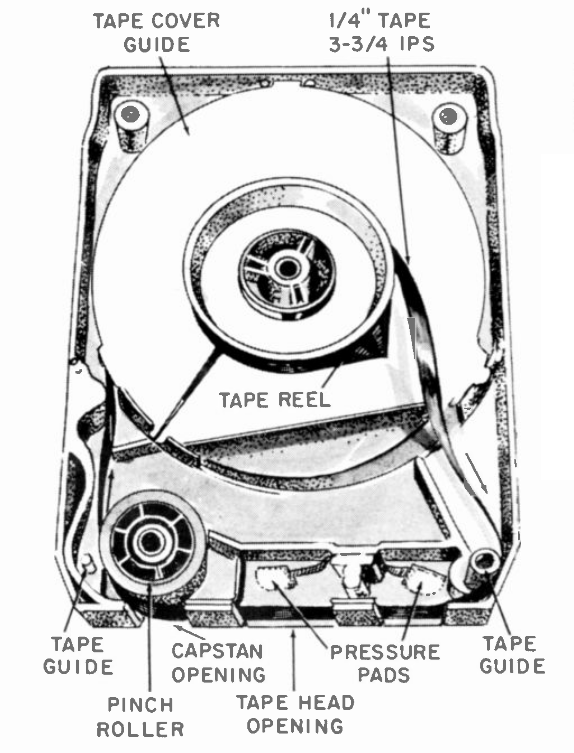
All commercial Eight-track releases used ferric-oxide (IEC Type I) tape. The looped design demanded a durable, low-friction coating, making chrome and metal formulations unsuitable due to increased wear and particulate shedding.
Equalization followed the NAB standard used for 3.75 ips reel-to-reel machines, employing 3180µs and 90µs time constants.¹ This differs from the compact cassette. Eight-tracks maintained a consistent EQ curve across all manufacturers.
We were furnished with several recordings of eight-track cartridges by Dennis Han, for which we are very grateful. From these recordings, we are able to report that:
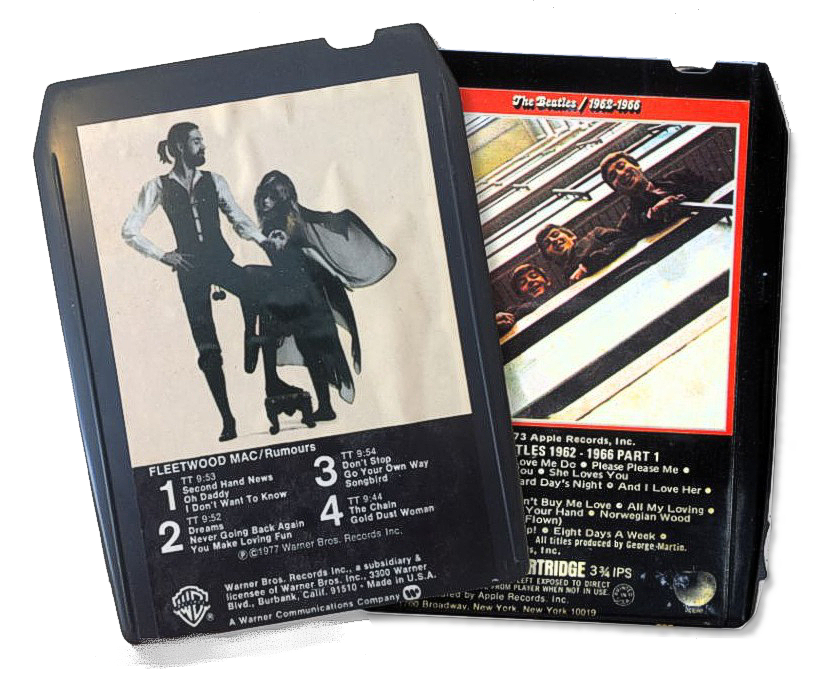
Dolby B decoding in Stereo Lab works well with Dolby encoded eight-track cartridges. British eigh-track tapes used Dolby B encoding, but this was rarer in the North America. The only company that released a lot of eight-track tapes with Dolby is Columbia.
CATHODE noise reduction in Stereo Lab works very well for eight-track recordings (without Dolby B encoding). Hiss is greatly improved. The following clip concentrates on the intertrack hiss on a non-Dolby encoded cartridge of The Beatles Abbey Road. You can clearly hear the studio tape hiss start at the beginning of second track. This is inaudible without CATHODE noise reduction.
However, CATHODE does not improve the 10Hz pulsing artefact which is a known eight-track problem related to the old, perished pinch roller being inside the cartridge - and present on these clips. There's scope for improving the quality of eight-track "head-drops" by opening the cartridge and replacing this component. Replacement tyres are available.²
We have not found that Azimuth Dragon processing is needed or desirable with eight-track cartridges: the higher tape speed ensures much stronger and more reliable treble than with compact cassettes.
Before looking at digitisation of eight-frack cartridges, Dennis warns, ".... the foam pressure pads crumble to dust after a few decades and should be replaced, and the program sensor that splices the ends of the tape together should be replaced; in other words, restoring an 8-track cartridge takes some effort before digitizing."

 Apple Certified Developer. Stereo Lab, Aria 51, Aria 20, Head Space, Groove Sleuth, iLOOP and FRANCINSTIEN T-Sym are trademarks of Pspatial Audio. FRANCINSTIEN and Bride of FRANCINSTIEN (BoF) are trademarks of Phaedrus Audio. Macintosh and the Mac logo are trademarks of Apple Computer, Inc.